
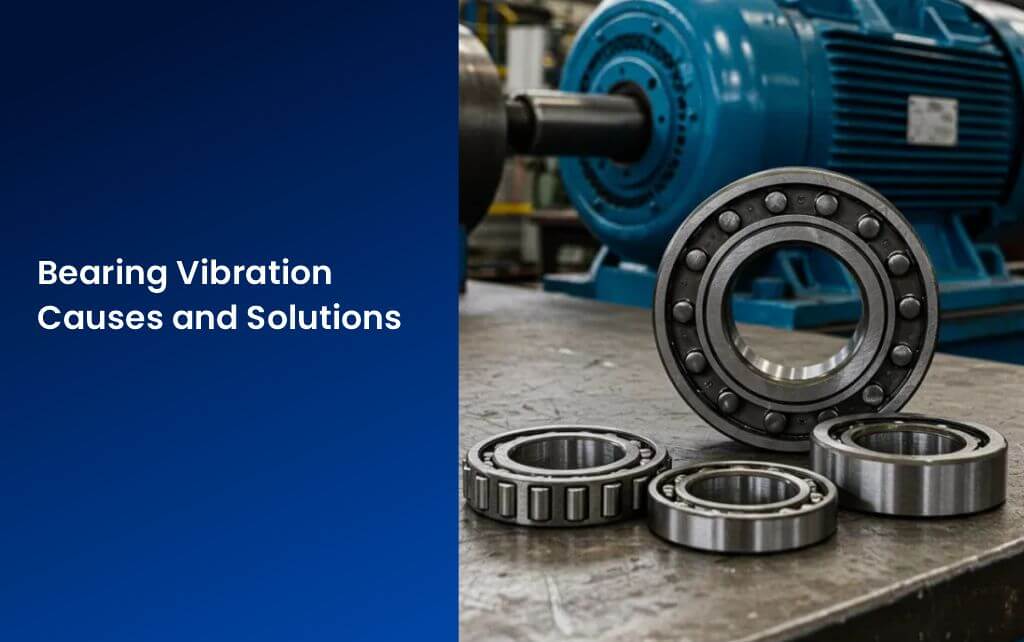
Bearing vibration ranks among the leading causes of unplanned machinery failure across manufacturing plants, power transmission systems, and rotating equipment of every size. A bearing that runs smoothly one week and vibrates excessively the next is already telling you something about its condition, and ignoring that signal almost always costs more than addressing it early. This article on bearing vibration: causes and solutions explains what causes excessive vibration, how to diagnose it accurately, and which practical steps reduce vibration while extending bearing life.
Readers will learn how to distinguish normal operating vibration from abnormal patterns, identify the mechanical, lubrication, and installation issues that generate vibration, and apply monitoring and maintenance practices that catch problems before they cause downtime. Engineers, plant managers, maintenance professionals, and procurement teams responsible for industrial bearings will find direct, actionable guidance in every section.
What Is Bearing Vibration and Why Does It Matter?
What causes bearing vibration?
Bearing vibration results from mechanical forces acting on the rolling elements, raceways, and supporting structure of a bearing. These forces include load variation, surface irregularities, misalignment, looseness, and imbalance in the rotating system.
Every rotating bearing produces some level of vibration as rolling elements pass over the raceway. This baseline vibration stays low, consistent, and predictable in a healthy bearing. Vibration analysis distinguishes this normal signature from abnormal patterns that indicate developing damage.
Normal vs Abnormal Vibration
Is bearing vibration normal?
A small amount of vibration is normal in any rotating bearing. Vibration becomes abnormal when its amplitude increases over time, when new frequency components appear in the vibration spectrum, or when audible noise accompanies the vibration.
| Vibration Characteristic | Normal Operation | Abnormal Operation |
| Amplitude trend | Stable over time | Rising steadily |
| Frequency content | Consistent with bearing geometry | New peaks appear |
| Noise level | Quiet, uniform hum | Grinding, knocking, or squealing |
| Temperature | Stable within rated range | Rising alongside vibration |
| Pattern | Smooth and repeatable | Erratic or intermittent |
Monitoring these characteristics over time gives maintenance teams an early warning system. A bearing that shows a gradual increase in vibration amplitude over several weeks is often further along in the failure process than one that shows a sudden spike, since gradual increases usually indicate wear or fatigue progressing through the bearing material.
Common Causes of Bearing Vibration
Excessive bearing vibration rarely comes from a single source. Most cases involve one dominant cause combined with one or two contributing factors. Identifying the primary cause correctly determines whether the fix is a simple adjustment or a full bearing replacement.
Poor Lubrication
Can poor lubrication cause bearing vibration?
Poor lubrication causes bearing vibration by allowing metal-to-metal contact between rolling elements and raceways. Insufficient grease, degraded lubricant, or the wrong lubricant viscosity all increase friction and generate vibration and heat.
Lubricant film thickness keeps rolling elements separated from the raceway surface. When this film breaks down, contact stress rises sharply, generating both vibration and audible noise. Over-lubrication causes its own problems, since excess grease increases churning resistance and can raise operating temperature enough to accelerate lubricant breakdown.
Shaft Misalignment
Shaft misalignment forces a bearing to absorb loads it was never designed to carry in that direction. Angular misalignment and parallel misalignment both introduce cyclic loading on the rolling elements once per shaft revolution, producing a vibration frequency tied directly to rotational speed.
Improper Installation
Bearing installation errors account for a large share of early bearing failures. Common installation mistakes include:
- Applying force directly to the rolling elements during mounting instead of the correct ring
- Using excessive force or improper tools, which can create indentations in the raceway
- Failing to heat bearings evenly before interference fits, causing uneven expansion
- Installing a bearing at an angle, which creates immediate raceway damage
Any of these errors introduces surface defects that generate vibration from the very first hours of operation.
Bearing Contamination
Dust, moisture, metal particles, and chemical residue entering a bearing housing accelerate wear on the raceway and rolling element surfaces. Contamination creates microscopic pitting, and each pit generates a small vibration impulse every time a rolling element passes over it. Seal failures often allow this contamination to reach the bearing, making seal condition an important part of any inspection.
Unbalanced Rotating Components
An unbalanced shaft, coupling, fan, or impeller generates a centrifugal force that rotates with the shaft, producing vibration at a frequency equal to the rotational speed. This unbalance places continuous cyclic stress on the bearing, and while the bearing itself may be undamaged, sustained exposure to unbalance vibration accelerates fatigue over time.
Mechanical Looseness
Looseness between the bearing and shaft, between the bearing and housing, or in mounting bolts allows small movements that generate impact vibration. This looseness often shows up as an unstable vibration signature that changes with load or direction, unlike the steady frequency pattern produced by imbalance.
Excessive Loads and Incorrect Bearing Selection
A bearing operating above its rated dynamic or static load capacity experiences accelerated fatigue. Incorrect bearing selection, choosing a bearing rated for lighter service than the application demands, produces the same result. Selecting the correct bearing type and size for actual operating loads remains one of the most effective ways to prevent vibration problems before they start.
Electrical Damage
In motor-driven equipment, stray electrical current can pass through the bearing rather than through the intended grounding path. This current causes small localized melting on the raceway surface, known as fluting, which generates a distinct vibration pattern and audible buzzing.
Wear, Fatigue, and Manufacturing Defects
Bearings reaching the end of their fatigue life develop surface cracking and spalling that generate increasing vibration. Manufacturing defects, though rare in bearings sourced from reputable suppliers, can include inconsistent raceway geometry or subsurface material flaws that shorten service life and generate vibration earlier than expected.
Housing Problems and Mounting Errors
A housing bore that has worn oversized, developed cracks, or lost its original roundness no longer supports the bearing outer ring correctly. This creates uneven load distribution around the bearing, generating vibration that often appears alongside noise from the housing itself.
High Operating Temperatures
Elevated operating temperature accelerates lubricant breakdown and can change internal clearance within the bearing. Both effects increase vibration, making temperature monitoring a useful early indicator alongside vibration monitoring.
How to Diagnose Bearing Vibration
How is bearing vibration measured?
Bearing vibration is measured using accelerometers or vibration sensors that capture amplitude and frequency data, which technicians then analyze against baseline readings and industry vibration severity standards.
How do you diagnose bearing vibration?
Diagnosing bearing vibration involves collecting vibration data at defined measurement points, comparing the frequency spectrum against known bearing defect frequencies, and correlating findings with temperature, noise, and operating history.
Step-by-Step Vibration Diagnostic Process
- Establish a baseline vibration reading when the bearing and machine are known to be in good condition.
- Take regular vibration readings at consistent measurement points on the bearing housing.
- Compare current readings against the baseline and against accepted vibration severity charts.
- Analyze the frequency spectrum for peaks matching known bearing defect frequencies.
- Cross-check vibration findings with temperature readings and audible inspection.
- Document trends over time rather than relying on a single reading.
What vibration level is acceptable for bearings?
Acceptable vibration levels vary by machine class, speed, and mounting type, and are typically defined by international vibration severity standards. Rather than relying on a single fixed number, maintenance teams should track vibration trends against the specific machine’s baseline and applicable severity chart for its class.
Bearing Vibration Symptoms Checklist
- Increasing vibration amplitude over consecutive readings
- Audible grinding, knocking, or squealing noise
- Rising bearing temperature without a change in load
- Visible grease discoloration or contamination during inspection
- Irregular or inconsistent vibration pattern under steady load
- Vibration frequency matching a known bearing defect frequency
What are the symptoms of bearing failure?
Symptoms of bearing failure include rising vibration levels, unusual noise, elevated operating temperature, grease discoloration, and in later stages, visible play or roughness when the shaft is rotated by hand.
What happens if bearing vibration is ignored?
Ignoring bearing vibration allows the underlying cause, whether contamination, misalignment, or fatigue, to progress until the bearing seizes or fractures. This often damages the shaft, housing, and surrounding components, turning a low-cost bearing replacement into a major repair with extended downtime.
Practical Solutions to Reduce Bearing Vibration
How do you reduce bearing vibration?
You reduce bearing vibration by correcting the root cause, which typically involves proper lubrication, accurate shaft alignment, correct installation procedures, contamination control, and selecting a bearing matched to the actual operating load and speed.
Proper Installation Methods
- Use the correct mounting tools that apply force to the proper ring during installation
- Heat bearings evenly using induction heaters for interference fits rather than open flame
- Verify shaft and housing dimensions against the bearing tolerance class before installation
- Check axial and radial clearance after mounting to confirm correct fit
Lubrication Best Practices
- Follow the lubricant type, quantity, and interval specified for the bearing and operating conditions
- Avoid mixing incompatible grease types during relubrication
- Monitor lubricant condition through sampling in critical applications
- Adjust lubrication intervals for high-temperature or high-speed operating conditions
Correct Bearing Selection
Selecting the right bearing type, load rating, and precision grade for the application prevents many vibration problems before installation. Applications with higher speed or precision requirements benefit from bearings manufactured to tighter tolerance classes, while heavy-load applications require bearings rated for the actual dynamic load the machine generates.
Alignment Procedures
Accurate shaft alignment during installation and after any maintenance work prevents the cyclic loading that misalignment introduces. Laser alignment tools provide more consistent results than straightedge methods and should be used whenever precision alignment matters for the application.
Balancing Rotating Equipment
Balancing fans, couplings, and rotating assemblies removes the centrifugal force that generates vibration at rotational frequency. Field balancing should be part of the commissioning process for any new rotating equipment and repeated after any repair involving rotor components.
Clean Operating Environments and Sealing
Maintaining clean operating environments around bearing housings reduces contamination risk. Selecting the correct sealing option for the environment, whether standard seals, shields, or specialized seals for washdown or dusty conditions, keeps contaminants away from the raceway and rolling elements.
Predictive Maintenance and Condition Monitoring
Which bearing is best for reducing vibration?
The best bearing for reducing vibration depends on the application, but bearings manufactured to higher precision grades, fitted correctly, and matched to the actual load and speed consistently produce lower vibration than standard bearings installed without proper verification.
Condition monitoring systems that track vibration, temperature, and lubrication condition continuously give maintenance teams the data needed for predictive maintenance. Instead of replacing bearings on a fixed schedule regardless of condition, predictive maintenance uses actual bearing condition data to schedule replacement before failure occurs, reducing both unnecessary replacements and unplanned downtime.
Scheduled Inspection and Maintenance Checklist
- Conduct routine vibration monitoring at defined intervals
- Inspect seals and housings during scheduled maintenance
- Verify lubrication condition and replenish according to schedule
- Check alignment after any coupling or motor replacement
- Balance rotating components after repair work
- Track vibration and temperature trends in a maintenance log
- Replace bearings showing consistent, rising vibration trends before failure occurs
Expert Tip
Bearing vibration troubleshooting works best when maintenance teams treat vibration monitoring as a trend analysis exercise rather than a pass or fail test on a single reading. A rising trend, even within an acceptable absolute range, often reveals developing bearing damage well before it becomes audible or reaches a critical threshold.
Sourcing Reliable Bearings to Prevent Vibration Problems
Many vibration problems trace back to bearing quality rather than installation or maintenance practices. A bearing manufactured with inconsistent tolerances or poor material quality generates vibration issues no maintenance program can fully correct. This makes supplier selection an important part of any vibration reduction strategy.
S. Goel Bearing & Co. supplies rolling bearings, ball bearings, and a broad range of industrial bearings manufactured to consistent tolerance and quality standards. As an established bearing importer and ball bearing importer, the company works directly with engineers, OEMs, distributors, and maintenance teams to match bearing specifications to actual application requirements, reducing the risk of vibration problems tied to incorrect selection or inconsistent quality.
Key Takeaways
- Bearing vibration signals a mechanical condition, and rising vibration trends indicate developing damage.
- Poor lubrication, misalignment, contamination, looseness, and incorrect installation are the most common causes of excessive vibration.
- Vibration monitoring and condition monitoring give maintenance teams the data needed for predictive maintenance rather than reactive repairs.
- Correct installation, alignment, balancing, and lubrication practices prevent most vibration problems before they start.
- Sourcing bearings from a dependable supplier reduces the risk of vibration issues tied to inconsistent manufacturing quality.
Frequently Asked Questions
What causes bearing vibration?
Bearing vibration comes from mechanical forces including misalignment, poor lubrication, contamination, imbalance, looseness, and wear acting on the rolling elements and raceways.
How do you reduce bearing vibration?
Reduce bearing vibration by correcting the root cause through proper lubrication, accurate alignment, correct installation, contamination control, and correct bearing selection.
Is bearing vibration normal?
A small, stable amount of vibration is normal. Vibration becomes a concern when amplitude rises over time or new frequency patterns appear.
What are the symptoms of bearing failure?
Symptoms include rising vibration, unusual noise, increasing temperature, grease discoloration, and eventually visible roughness or play in the bearing.
Can poor lubrication cause bearing vibration?
Yes, poor lubrication allows metal-to-metal contact between rolling elements and raceways, increasing both friction and vibration.
How is bearing vibration measured?
Vibration is measured using accelerometers or vibration sensors that capture amplitude and frequency data for comparison against baseline readings.
What vibration level is acceptable for bearings?
Acceptable levels vary by machine class and speed, and are best evaluated against the machine’s own baseline and relevant vibration severity standards rather than a single fixed number.
How do you diagnose bearing vibration?
Diagnosis involves collecting vibration readings at consistent points, comparing them to baseline data, analyzing the frequency spectrum, and cross-checking with temperature and noise observations.
What happens if bearing vibration is ignored?
Ignored vibration allows the underlying cause to progress until the bearing seizes or fractures, often damaging the shaft and housing and extending downtime.
Which bearing is best for reducing vibration?
Bearings manufactured to higher precision grades and correctly matched to the application load and speed consistently produce lower vibration than standard bearings installed without verification.
Conclusion
Bearing vibration: causes and solutions comes down to identifying the mechanical root cause early and correcting it before damage spreads to the shaft, housing, or surrounding equipment. Poor lubrication, misalignment, contamination, looseness, and incorrect bearing selection remain the most common causes of excessive vibration, and each one responds well to the practical solutions outlined in this article, from correct installation and alignment procedures to predictive maintenance and consistent condition monitoring.
Reliable bearing performance starts with a bearing manufactured to consistent quality standards and matched correctly to the application. S. Goel Bearing & Co. supplies rolling bearings, ball bearings, and a full range of industrial bearings backed by technical expertise in bearing selection, installation guidance, and vibration troubleshooting. Contact the technical team at S. Goel Bearing & Co. today to discuss your application, request guidance on reducing bearing vibration, or explore the company’s full range of premium industrial bearing solutions.