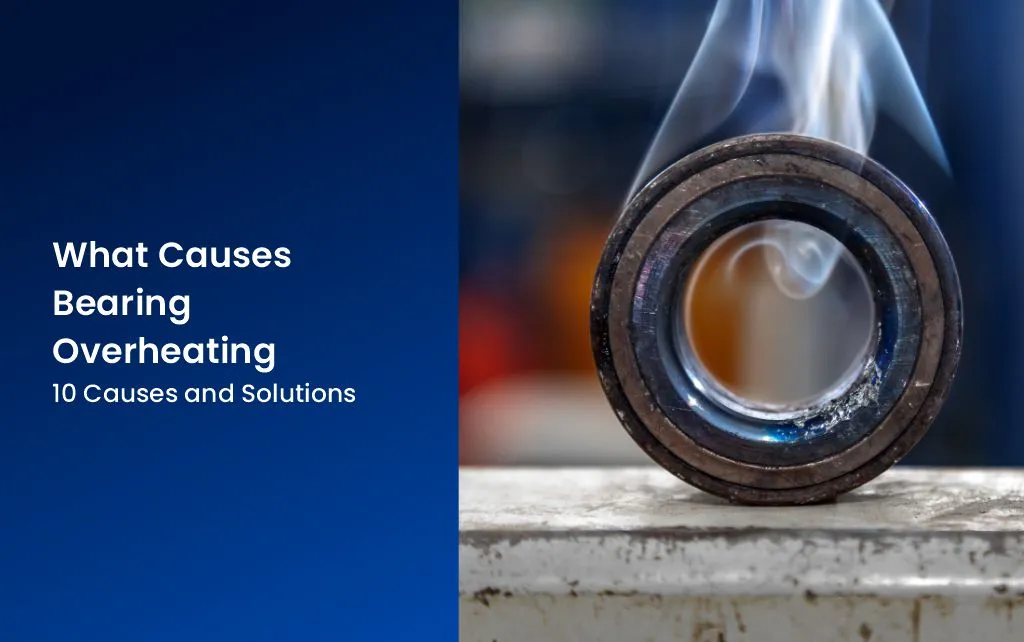
A bearing that runs hotter than usual is not automatically a defective bearing. In industrial maintenance, this is one of the most common misdiagnoses on the plant floor. Excess heat is a symptom, not a diagnosis. Before a bearing gets condemned and pulled off a shaft, the actual operating conditions around it need to be checked, because bearing overheating is almost always the result of something happening around the bearing rather than a fault inside it.
At S. Goel Bearing & Co., questions about bearing overheating come up regularly from plant engineers, maintenance managers, and procurement teams trying to understand why a motor, pump, gearbox, or conveyor bearing has started running hot. The pattern is consistent across industries: lubrication problems, incorrect fits, misalignment, contamination, excessive load, and improper installation account for the overwhelming majority of overheating complaints, far more often than a genuine manufacturing defect.
This article explains what causes bearing overheating, covers the 10 major causes with practical diagnostic checks and solutions, and walks through how experienced maintenance teams isolate the real root cause before replacing anything.
Key Takeaway: Bearing overheating is usually caused by excessive friction from incorrect lubrication, excessive or abnormal load, misalignment, incorrect fits or clearance, contamination, or excessive speed. The correct first step is identifying the root cause, not replacing the bearing.
What Causes Bearing Overheating?
Bearing overheating is caused by excess friction inside the bearing, and that excess friction is almost always traced back to one or more of the following: insufficient or excessive lubrication, contamination, misalignment, incorrect internal clearance or preload, excessive load, excessive speed, incorrect installation, or poor heat dissipation. The bearing itself generates heat as a normal part of operation. Overheating occurs when something disrupts the balance between heat generated and heat dissipated.
Normal Heat Versus Abnormal Overheating
Every rolling bearing generates some heat during operation. Rolling elements moving through the raceway, lubricant film shearing, and seal friction all produce heat as a byproduct of normal mechanical work. A bearing running at a stable temperature above ambient is expected behavior, not a warning sign by itself.
Abnormal overheating is different. It shows up as one or more of the following:
- A steady rise in bearing running temperature over hours or days with no change in load or speed
- A sudden temperature spike after a stable running period
- Temperatures that climb well beyond what similar bearings on comparable equipment are showing
- Heat accompanied by unusual noise, vibration, or a burnt lubricant smell
The single reading matters less than the trend. A bearing sitting at 75°C that has been stable there for months is often less concerning than a bearing that climbed from 45°C to 65°C in a single shift. Experienced maintenance teams track temperature trends over time rather than reacting to one number in isolation, because a rising trend usually points to a developing mechanical or lubrication problem, while a stable elevated temperature may simply reflect the application’s normal operating conditions.
10 Common Causes of Bearing Overheating
The following 10 causes account for the large majority of bearing overheating cases seen across motors, pumps, gearboxes, conveyors, fans, compressors, and machine tool spindles.
Cause 1: Insufficient Lubrication
Why it causes overheating: Lubricant forms a film that separates rolling elements from the raceway. When there is not enough grease or oil present, metal-to-metal contact increases inside the bearing, and friction rises sharply. This is one of the most frequent causes of premature bearing failure in industrial maintenance, particularly on equipment where relubrication intervals have been extended or skipped.
What to check:
- Grease fill level against the bearing manufacturer’s fill recommendation
- Relubrication history and whether the interval matches operating speed and duty cycle
- Signs of grease starvation such as dry, hardened, or discolored grease near the bearing
Solution: Relubricate to the correct quantity using the specified grease type, and correct the relubrication schedule based on actual operating speed, load, and ambient temperature rather than a generic interval.
What happens if ignored: Continued dry running accelerates wear on the raceway and rolling elements, leading to increased vibration, noise, and eventually bearing seizure.
Cause 2: Excessive Lubrication or Over-Greasing
Why it causes overheating: More grease is not better. When a bearing cavity is overfilled, the rolling elements have to churn through excess grease with every rotation. This churning generates significant friction and heat, particularly at higher operating speeds. Over-greasing is a common mistake during preventive maintenance rounds when technicians add grease without removing the old charge or without knowing the correct fill percentage.
What to check:
- Grease quantity against the housing free space, typically expressed as a percentage fill rather than “full”
- Whether grease is being added on a fixed schedule without checking actual consumption
- Signs of grease purging from seals, which can indicate overfill
Solution: Reduce grease fill to the correct percentage of free space for the housing and operating speed, and train maintenance staff on correct fill quantities rather than relubricating by habit.
What happens if ignored: Continuous churning heat degrades the grease faster than expected, which then compounds into a lubricant degradation problem on top of the original over-greasing issue.
Cause 3: Incorrect Lubricant Type or Lubricant Degradation
Why it causes overheating: Grease and oil are selected based on viscosity, base oil type, thickener, and temperature range for a reason. A lubricant with the wrong viscosity for the operating speed and load will not form an adequate film, increasing friction. Lubricant that has degraded due to age, oxidation, or thermal breakdown loses its film strength the same way, even if the correct product was used originally.
What to check:
- Lubricant viscosity grade against the bearing’s speed and load requirements
- Grease color, texture, and smell for signs of oxidation or thermal breakdown
- Whether incompatible greases were mixed during a relubrication event
- Time in service against the lubricant’s expected working life for that application
Solution: Confirm the lubricant specification matches the application’s speed, load, and temperature range, and replace degraded grease completely rather than topping it up. Avoid mixing greases with different thickener types unless compatibility has been confirmed.
What happens if ignored: A degraded or mismatched lubricant film breaks down progressively, allowing metal-to-metal contact that accelerates raceway and rolling element wear.
Cause 4: Contamination or Damaged Sealing
Why it causes overheating: Dirt, dust, moisture, or process contaminants entering a bearing act as abrasives inside the lubricant film. Contaminated grease loses its lubricating properties and introduces particles that increase internal friction directly. Damaged, worn, or incorrectly fitted seals are usually the entry point.
What to check:
- Seal condition for cracking, wear, or improper seating
- Grease sample for visible particles, discoloration, or a gritty texture
- Housing breather condition and surrounding environment for dust, moisture, or washdown exposure
Solution: Replace damaged seals with the correct seal type for the environment, and flush and replace contaminated lubricant rather than topping it up. In dusty or wet environments, consider improved sealing arrangements suited to that specific application.
What happens if ignored: Contaminant particles score the raceway surface, producing pitting and increased vibration that compounds the original heat problem and shortens bearing life significantly.
Cause 5: Misalignment
Why it causes overheating: When a shaft and housing are not properly aligned, the load inside the bearing is no longer distributed evenly across the rolling elements. Certain areas of the raceway carry disproportionate load, increasing localized friction and heat. Bearing misalignment is a common but often overlooked cause of overheating because the bearing itself may show no obvious external damage in the early stages.
What to check:
- Shaft-to-housing alignment using dial indicators or laser alignment tools
- Uneven wear patterns on the raceway during inspection
- Coupling and belt alignment on connected equipment
Solution: Correct alignment using proper alignment procedures and tools rather than relying on visual estimation. Verify alignment after any equipment reinstallation or maintenance work that involved disconnecting the shaft.
What happens if ignored: Uneven load distribution accelerates fatigue on specific sections of the raceway, leading to localized spalling and eventually catastrophic bearing failure.
Cause 6: Excessive Preload or Incorrect Bearing Fit
Why it causes overheating: Preload that is set too tight, or a shaft and housing fit that is tighter than specified, reduces the internal clearance the bearing needs to operate freely. This forces rolling elements against the raceway with more force than the bearing was designed to handle, increasing friction dramatically. Incorrect fits often result from using standard tolerances without checking the specific bearing’s fit requirements for that application.
What to check:
- Shaft and housing dimensions against the bearing manufacturer’s recommended tolerance class
- Bearing running clearance after installation, where measurable
- Installation method used, particularly for interference fits requiring heat or press mounting
Solution: Verify shaft and housing tolerances against the specific bearing’s fit recommendations before installation, and use correct mounting procedures such as controlled induction heating for interference fits rather than force-fitting with improper tools.
What happens if ignored: Sustained excessive preload generates heat that accelerates lubricant breakdown and can cause premature raceway fatigue, sometimes within a short period after installation.
Cause 7: Incorrect Internal Clearance
Why it causes overheating: Internal clearance that is too tight, whether from selection error or from thermal expansion during operation, restricts the small amount of movement rolling elements need. Clearance that is too loose, on the other hand, can allow excessive rolling element skidding, which also generates heat. Getting clearance right requires accounting for the operating temperature differential between the inner ring, outer ring, and rolling elements, not just the clearance measured at room temperature.
What to check:
- Clearance class selected against expected operating temperature rise
- Temperature differential between shaft and housing during operation
- Bearing running noise, which often changes audibly with incorrect clearance
Solution: Select a clearance class appropriate for the expected operating temperature differential, particularly on applications with significant heat generation from the shaft or surrounding process. Confirm clearance selection with technical guidance where the application involves high speeds or high temperature differentials.
What happens if ignored: Chronic clearance problems produce continuous elevated friction that shortens lubricant life and accelerates wear on the raceway and cage.
Cause 8: Excessive or Abnormal Load
Why it causes overheating: Every bearing is rated for a specific dynamic and static load range based on its size and internal geometry. Operating a bearing above its rated load, or subjecting it to shock loading it was not designed for, increases the contact stress between rolling elements and raceway. Higher contact stress means higher friction and higher heat generation.
What to check:
- Actual operating load against the bearing’s rated capacity for that application
- Recent changes in process conditions, such as increased throughput or added mechanical load
- Evidence of shock loading, such as impact marks or brinelling on the raceway
Solution: Confirm the bearing selected matches the actual application load, including peak and shock loads, not just average running load. Where load has increased due to a process change, re-evaluate whether the existing bearing selection is still adequate.
What happens if ignored: Sustained overload accelerates fatigue life consumption, often leading to spalling and structural damage well before the bearing’s expected service life.
Cause 9: Excessive Operating Speed
Why it causes overheating: Every bearing has a limiting speed based on its design, cage type, lubricant, and cooling conditions. Running a bearing above its appropriate speed range for the given lubrication method increases the frequency of rolling element contact and lubricant shear, both of which generate more heat than the lubricant film can dissipate.
What to check:
- Actual shaft speed against the bearing and lubricant’s suitable speed range for that mounting arrangement
- Cage type and material suitability for the operating speed
- Whether the lubrication method, such as grease versus oil, is appropriate for the speed involved
Solution: Confirm that the bearing type, cage design, and lubrication method are suited to the actual operating speed. High-speed applications often require oil lubrication, specific cage materials, or bearing designs different from standard grease-lubricated bearings.
What happens if ignored: Speed-related overheating tends to escalate quickly because higher temperatures reduce lubricant viscosity further, which increases friction further in a compounding cycle that can lead to rapid failure.
Cause 10: Incorrect Installation or Poor Heat Dissipation
Why it causes overheating: Installation errors such as improper mounting force, shaft or housing damage from installation, cocked bearings, or incorrect use of mounting tools can introduce stress and misalignment that are not visible externally but generate heat during operation. Separately, poor heat dissipation from inadequate housing design, blocked cooling paths, or high ambient temperature around the bearing can cause a properly installed bearing to run hotter than expected simply because the heat generated has nowhere to go.
What to check:
- Installation records and method used, including whether proper mounting tools were used
- Housing and surrounding equipment for cooling fins, airflow paths, or cooling jacket function
- Ambient temperature around the bearing housing compared to the rest of the plant
Solution: Follow correct installation procedures using bearing-appropriate tools, and verify that housing cooling paths are clear and functioning. Where ambient conditions are consistently high, consider whether the lubrication and bearing selection account for the elevated baseline temperature.
What happens if ignored: A bearing installed with hidden stress or operating in a poorly cooled housing will run at an elevated baseline temperature indefinitely, reducing lubricant life and shortening overall bearing service life even without any other fault present.
How to Diagnose an Overheating Bearing
A bearing running hot does not tell you why on its own. Experienced maintenance teams follow a structured sequence rather than jumping straight to replacement.
Measure
- Record the actual bearing temperature using a reliable method, such as an infrared thermometer at a consistent point, or a fixed temperature sensor where installed
- Track the trend over time rather than relying on a single spot reading
- Compare against similar bearings on comparable equipment running under similar conditions
Inspect
- Check grease or oil condition, quantity, and appearance
- Inspect seals for damage, wear, or contamination ingress
- Check for visible signs of misalignment, uneven wear, or installation damage
- Listen for abnormal noise and check for vibration using handheld or fixed monitoring equipment
Identify
- Cross-reference findings against operating load, speed, and application conditions
- Determine whether the issue is lubrication-related, mechanical, environmental, or a combination
- Rule out causes systematically rather than assuming the most obvious explanation
Correct
- Address the confirmed root cause, whether that means relubrication, alignment correction, load reassessment, or reinstallation
- Avoid stacking multiple corrective actions at once without verifying which one actually resolves the issue, since this makes future troubleshooting harder
Monitor
- Track temperature, vibration, and noise after the corrective action to confirm the fix has worked
- Continue periodic monitoring, since a bearing that appears to recover can still be carrying underlying damage from the overheating period
This sequence matters because a temperature increase does not automatically mean the bearing itself has failed. Experienced engineers check operating conditions systematically before declaring a bearing defective, and this process is what separates a genuine root-cause fix from a repeat failure a few weeks later.
What Temperature Is Too Hot for a Bearing?
There is no single universal temperature that applies to every bearing. What counts as too hot depends on the bearing type, the lubricant in use, rotational speed, load, seal design, ambient conditions, and the specific application’s operating requirements. A temperature that is entirely normal for a high-speed spindle bearing running on oil mist lubrication could indicate a serious problem on a slow-speed, grease-lubricated conveyor bearing.
For this reason, the applicable manufacturer’s operating limits and the lubricant manufacturer’s maximum service temperature for the specific grease or oil in use should be the reference point, not a generic number pulled from unrelated equipment.
What matters more than an absolute figure is the rate and pattern of change. A bearing that suddenly rises 15 to 20 degrees above its established baseline over a short period deserves investigation even if the absolute reading does not sound extreme, because a sudden shift usually signals a developing mechanical or lubrication problem. A gradual, stable temperature that has been consistent for a long operating period, even if it sits on the higher side, is generally less urgent than a rapid unexplained spike.
How to Prevent Bearing Overheating
Prevention is more reliable and less costly than repeated troubleshooting after the fact. The following practices reduce the likelihood of overheating across most industrial applications.
- Correct bearing selection: Choose a bearing type, size, and internal clearance class matched to the actual load, speed, and temperature profile of the application, not just the shaft diameter.
- Correct clearance and fit: Verify shaft and housing tolerances against the bearing manufacturer’s recommendations before installation.
- Proper lubrication: Use the correct lubricant type and viscosity for the operating conditions, and fill to the correct quantity rather than estimating.
- Correct relubrication practice: Base relubrication intervals on actual operating speed, load, and ambient conditions rather than a fixed calendar schedule alone.
- Proper installation: Use correct mounting tools and procedures, including controlled heating for interference fits where required.
- Alignment verification: Check shaft-to-housing alignment during installation and after any maintenance that disturbs the shaft.
- Load management: Confirm the bearing’s rated capacity is appropriate for actual operating load, including peak and shock conditions.
- Speed control: Match bearing type, cage design, and lubrication method to the intended operating speed.
- Contamination prevention: Maintain seal integrity and protect housings from dust, moisture, and process contaminants.
- Seal inspection: Include seal condition checks in routine maintenance rounds rather than only inspecting the bearing itself.
- Temperature and vibration monitoring: Track trends over time rather than reacting only to alarms, and use this data to catch developing issues early.
- Preventive maintenance: Build bearing checks into a regular maintenance schedule rather than only addressing bearings after a failure or complaint.
When Should You Replace an Overheating Bearing?
Replacement becomes necessary once physical evidence shows the bearing itself has sustained damage, rather than simply running hot due to an external condition. Indicators that typically support replacement include:
- Visible raceway damage, such as pitting, spalling, or flaking
- Discoloration from heat exposure, indicating the bearing has already run at damaging temperatures
- Degraded, burnt, or contaminated lubricant that cannot be restored by cleaning and relubrication
- Surface damage on rolling elements or raceways found during inspection
- Excessive or abnormal noise that persists after correcting external conditions
- Vibration levels outside acceptable limits for that equipment
- Internal clearance that has increased beyond specification due to wear
- Cage damage or deformation
- Rolling element damage such as cracking, spalling, or surface distress
- Overheating that returns after a genuine corrective action has already been applied and verified
Before installing a replacement, the root cause identified during diagnosis should be corrected. Installing a new bearing into the same uncorrected condition, whether that is a lubrication problem, an alignment issue, or an incorrect fit, typically leads to the same overheating pattern recurring within a similar timeframe. This is why experienced maintenance teams treat replacement as the final step after root-cause correction, not as the first response to a hot bearing.
Final Checklist for Troubleshooting Bearing Overheating
| Check Area | What to Verify |
| Lubrication | Correct type, viscosity, quantity, and condition |
| Load | Actual load against rated capacity, including shock loads |
| Speed | Operating speed against bearing and lubricant suitability |
| Alignment | Shaft-to-housing alignment within tolerance |
| Fit | Shaft and housing tolerances against manufacturer specification |
| Clearance | Internal clearance class appropriate for operating temperature |
| Installation | Correct tools and procedure used during mounting |
| Contamination | Seal condition and lubricant cleanliness |
| Seals | Physical condition and correct type for the environment |
| Cooling | Housing cooling paths clear and functioning |
| Temperature | Current reading against established baseline and trend |
| Vibration | Vibration levels against acceptable limits for the equipment |
Frequently Asked Questions
Why is my bearing overheating?
Bearing overheating usually results from excess internal friction caused by insufficient or excessive lubrication, contamination, misalignment, incorrect fit or clearance, excessive load, or excessive speed. The specific cause needs to be diagnosed through inspection rather than assumed, since several factors can produce similar temperature symptoms.
Can too much grease cause bearing overheating?
Yes. Overfilling a bearing housing forces rolling elements to churn through excess grease during rotation, generating friction and heat. This is a common maintenance mistake, particularly when grease is added on a fixed schedule without checking the correct fill percentage for that housing.
Can lack of lubrication cause a bearing to overheat?
Yes. Without adequate lubricant film, rolling elements make increased metal-to-metal contact with the raceway, sharply raising friction and temperature. Insufficient lubrication is one of the leading causes of both bearing overheating and premature bearing failure in industrial settings.
What temperature is too hot for a bearing?
There is no single universal limit, since acceptable temperature depends on bearing type, lubricant, speed, load, and application conditions. The manufacturer’s operating limits for the specific bearing and lubricant should be used as the reference, and a sudden rise from the established baseline is often more significant than the absolute reading.
Can misalignment cause bearing overheating?
Yes. Misalignment causes uneven load distribution across the rolling elements, concentrating stress and friction on specific areas of the raceway. This raises localized heat generation and, over time, produces uneven wear patterns that can be identified during inspection.
Does excessive bearing load increase temperature?
Yes. Operating a bearing above its rated dynamic or static load capacity increases contact stress between the rolling elements and raceway, which directly increases friction and heat. Shock loading beyond the bearing’s rated capacity produces the same effect, often more suddenly.
Should I replace a bearing that is overheating?
Not necessarily right away. The operating conditions, lubrication, alignment, and fit should be checked first, since overheating frequently results from a correctable external factor rather than bearing damage. Replacement becomes appropriate once physical damage, such as raceway pitting or excessive clearance, is confirmed through inspection.
How can I prevent bearing overheating?
Correct bearing selection, proper lubrication type and quantity, verified alignment, correct fits and clearance, appropriate load and speed ratings, contamination control, and regular temperature and vibration monitoring together reduce the likelihood of overheating across most industrial applications.
Conclusion
An overheating bearing is a signal to investigate, not an automatic reason to replace it. Across two decades of working with industrial bearings, the pattern remains the same: the majority of overheating cases trace back to lubrication mistakes, incorrect fits, misalignment, contamination, or load and speed conditions that do not match the bearing installed. Identifying the actual root cause, correcting it properly, and monitoring the equipment afterward prevents the same failure from repeating and protects the service life of the replacement bearing as well.
Correct bearing selection plays a direct role in avoiding overheating in the first place, which is why working with a knowledgeable bearing supplier familiar with your specific application matters as much as the maintenance practices applied afterward. S. Goel Bearing & Co. supports plant engineers, maintenance teams, and procurement professionals with genuine, correctly specified bearings and the technical guidance needed to select, install, and maintain them properly. For sourcing support, product availability, or help confirming the correct specification for your application, our team works as a reliable bearing importer and technical partner for industrial buyers who need accurate, dependable supply.
If you are dealing with a recurring bearing overheating issue or need help selecting the correct bearing for your equipment, reach out to S. Goel Bearing & Co. for technical assistance grounded in real industrial experience.