
In stone crushing operations across quarries, mining sites, and construction projects in India, bearings keep the heavy machinery turning day after day. A single bearing failure can stop production, rack up repair costs, and delay project timelines. Jaw crushers, cone crushers, and impact crushers all rely on bearings to handle massive radial loads, shock from rock impacts, and shaft deflections caused by uneven wear or misalignment.
This selection guide provides practical, industry-backed advice on choosing the right bearings for stone crusher machines. It covers the most suitable types, key decision factors, common issues, and maintenance tips to help plant managers and engineers achieve longer service life and lower operating costs. Spherical roller bearings for stone crushers stand out as the preferred choice in most heavy-duty setups due to their proven performance under tough conditions.
Why Bearings Matter So Much in Stone Crushers
Stone crushers process abrasive materials like granite, limestone, and basalt, generating extreme forces. The main shaft, eccentric mechanisms, and countershafts experience high radial loads from material weight and crushing pressure, plus axial thrust and constant vibration. Bearings support these rotating parts while minimizing friction and heat buildup.
In jaw crushers, bearings on the pitman and main frame endure oscillating motion and shock loads. Cone crushers demand bearings that manage combined radial and axial forces during gyratory action. Impact crushers face sudden, high-impact stresses from hammers striking rock. Reliable bearings reduce energy loss, prevent overheating, and maintain precise alignment, directly improving output and reducing maintenance frequency.
Poor bearing performance often leads to 30-50% of crusher downtime in aggregate plants. Selecting components designed for these demands helps operators run efficiently, even in dusty, high-vibration Indian environments.
Main Types of Bearings Used in Stone Crushers
Different crusher designs call for specific bearing types, but a few dominate due to load and alignment needs.
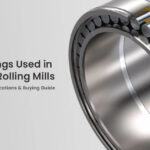
Spherical roller bearings top the list for most applications. They feature two rows of barrel-shaped rollers and a spherical outer race, allowing self-alignment up to several degrees. This compensates for shaft deflection and housing misalignment common in crushers.
Tapered roller bearings handle combined radial and axial loads well, often used in countershafts or thrust positions. Cylindrical roller bearings suit high radial loads with minimal axial capacity, appearing in some linear motion or support roles.
Spherical roller thrust bearings manage heavy axial forces, especially in vertical shaft setups like certain cone crushers. Ball bearings see limited use in crushers because they struggle with heavy shock loads and misalignment.
For the majority of stone crusher main shafts and eccentric assemblies—particularly in jaw and cone models—spherical roller bearings deliver the best balance of durability and adaptability.
Spherical Roller Bearings: The Go-To Choice for Stone Crushers
Spherical roller bearings for stone crushers excel because they handle high radial loads while tolerating misalignment and moderate axial forces. The self-aligning design prevents edge stress on rollers, reducing early wear even when shafts bend under load.
In jaw crushers, these bearings support the eccentric shaft, absorbing the back-and-forth crushing motion without binding. Cone crushers benefit from their ability to manage the gyrating head’s combined loads. Impact crushers use them in rotor supports where vibration peaks.
Advantages include shock load resistance, long fatigue life, and effective performance in contaminated environments when properly sealed. Many come with enhanced steel cages and surface treatments for better corrosion resistance in humid or dusty sites.
Spherical roller bearings for stone crushers from quality sources consistently outperform other types in uptime and total cost savings. Industries across India rely on them for reliable operation in demanding aggregate production.
Key Factors for Selecting Bearings in Crusher Applications
Start with load analysis: calculate expected radial and axial forces using crusher specifications and material throughput. Choose bearings with C/P ratios (dynamic load rating to equivalent load) above 10-15 for extended life in heavy-duty use.
Next, factor in misalignment tolerance—spherical designs handle 1-3 degrees easily. Speed remains moderate in crushers, but heat from sustained operation requires good lubrication paths.
Environmental protection is crucial. Opt for bearings with labyrinth seals, contact seals, or grease reservoirs to block dust and moisture. In abrasive Indian quarries, enhanced sealing cuts contamination-related failures significantly.
Consider material and cage type: brass or steel cages resist fatigue; some premium options use hardened steel for extra toughness. Always match dimensions to OEM standards for easy replacement and interchangeability.
Finally, evaluate lifecycle cost rather than just purchase price. Bearings that last longer reduce replacement frequency and downtime expenses.
Common Bearing Failures in Stone Crushers and How to Prevent Them
Bearing issues rank high among crusher breakdowns. Overheating often stems from insufficient lubrication, contaminated grease, or blocked oil paths. Symptoms include discolored oil or unusual noise.
Premature wear results from overload, misalignment, or shock overloads from oversized feed. Contamination by silica dust accelerates pitting and spalling.
Vibration spikes signal imbalance, loose fits, or worn components. In cone crushers, sinking heads or damaged thrust surfaces cause sudden acceleration and failure.
Prevention starts with proper installation: ensure correct fits, avoid hammer blows, and use induction heating for mounting. Follow lubrication schedules—use EP grease for high loads, relubricate at recommended intervals, and monitor temperature.
Regular checks catch early signs: listen for irregular sounds, measure vibration, and inspect seals. Clean breathers and filters to maintain lubricant quality. Addressing these basics extends bearing life dramatically.
Maintenance Tips to Maximize Bearing Life in Crushers
Good maintenance turns average bearings into long performers. Establish a routine: daily visual checks for leaks or unusual heat, weekly grease top-ups where applicable, and monthly vibration monitoring.
Use the right lubricant—high-viscosity, extreme-pressure types suited to slow, heavy loads. Avoid over-greasing, which generates heat.
Keep the machine clean: remove built-up dust around seals to prevent ingress. Align drive components properly to reduce stress.
Train staff on warning signs like temperature rises above 70-80°C or increased noise. Schedule periodic overhauls to inspect internals.
Partner with reliable suppliers who provide genuine, high-grade bearings and technical support. In India, S. Goel Bearing & Co. stands out as a leading importer, offering premium spherical roller bearings that meet international standards for crusher reliability.
Conclusion
Choosing the best bearings for stone crusher machines comes down to matching load, alignment, and environmental needs with proven designs. Spherical roller bearings for stone crushers remain the industry standard for their strength, self-aligning capability, and resilience in harsh conditions.
By focusing on quality components, proper selection, and consistent maintenance, plants achieve higher throughput, fewer breakdowns, and better profitability. For trusted spherical roller thrust bearings and other roller bearing solutions in India, visit S. Goel Bearing & Co. Our expertise helps industries source durable bearings that keep crushers running reliably. Contact the team today to discuss your specific requirements and get expert guidance tailored to your operations.