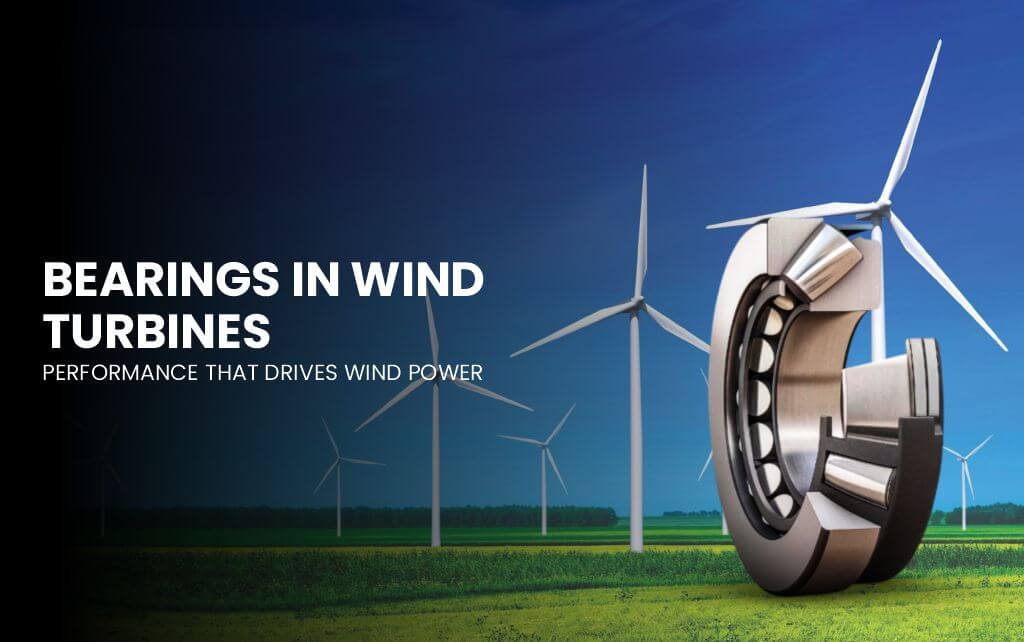
Wind turbines represent one of the most promising renewable energy technologies, transforming our energy landscape. These towering engineering marvels convert kinetic wind energy into clean, sustainable electricity through precision-engineered components. At the heart of these massive structures lie industrial bearings, serving as the critical foundation for efficient wind energy generation. At S. Goel Bearing & Co., we understand that selecting the right bearings for wind turbine applications creates the fundamental difference between optimal performance and costly operational downtime.
Why Wind Turbine Bearings Are Mission-Critical
Operating Under Extreme Conditions
Wind turbine bearings endure unprecedented operational challenges that distinguish them from conventional industrial applications. These critical components face constant variable wind loads with continuous fluctuations in rotational speeds and directional forces. The harsh environmental conditions include extreme temperatures ranging from -40°C to +80°C, creating thermal expansion and contraction cycles that test bearing materials to their limits.
Offshore wind installations present additional challenges with salt spray corrosion, while onshore turbines must withstand moisture infiltration and prolonged UV exposure. The bearings must support enormous loads as individual turbine components weigh several tons, with rotor assemblies creating complex multi-directional forces. Perhaps most demanding is the expectation for 20+ year operational life with minimal maintenance intervention, requiring exceptional durability and reliability.
Performance Impact on Energy Generation
The bearing selection directly influences every aspect of wind turbine performance. Energy conversion efficiency depends heavily on minimizing friction losses throughout the drivetrain to maximize electricity output from available wind resources. Operational availability becomes critical as unplanned maintenance shutdowns can cost operators thousands of dollars per day in lost revenue generation. The total cost of ownership calculation must consider extended component lifecycles and reduced replacement frequency that quality bearings provide.
Industry studies reveal that a single bearing failure in a wind turbine can result in downtime costs exceeding $50,000 per day, making bearing reliability a fundamental business consideration. This economic impact drives the necessity for premium bearing solutions designed specifically for wind energy applications.
Essential Bearing Types for Wind Energy Systems
Spherical Roller Bearings for Gearbox Applications
Spherical roller bearings have become the industry standard for wind turbine gearbox applications due to their exceptional capability to handle the demanding operational requirements. These bearings excel in gearbox systems where their self-aligning capability compensates for shaft deflection and housing misalignment that commonly occurs under dynamic wind loading conditions. Their robust construction design enables them to withstand shock loads from sudden wind gusts while maintaining smooth power transmission.
The high load capacity of spherical roller bearings allows them to handle combined radial and axial forces effectively, which is essential in gearbox main shaft applications. Their proven reliability has made them the industry-standard choice for supporting the critical power transmission path from rotor to generator. Technical specifications typically include:
- Load ratings up to 5,000 kN dynamic load capacity
- Operating speeds in the 50-1,800 RPM range
- Temperature tolerance from -20°C to +120°C
Cylindrical Roller Bearings for Generator Systems
Cylindrical roller bearings are commonly employed in wind turbine generators, where their precision performance maintains the tight tolerances required for electrical generation equipment. These bearings support high-speed rotating generator shafts while their low-friction design minimizes energy losses during the critical power conversion process. The excellent radial load capacity ensures smooth generator operation even under varying electrical and mechanical loads.
Their separable design enables simplified maintenance procedures, reducing service time and associated costs. The precision manufacturing reduces vibration levels, contributing to stable electrical output and extended equipment life. Generator applications typically operate at speeds ranging from 1,000-3,000 RPM in direct drive systems or 1,500-1,800 RPM in geared configurations, where cylindrical roller bearings provide the necessary performance characteristics.
Tapered Roller Bearings for Main Shaft Applications
Tapered roller bearings offer unique advantages for main rotor shaft support systems, where their ability to handle combined radial and axial loads simultaneously makes them ideal for complex loading scenarios. The adjustable preload capability allows engineers to optimize bearing stiffness and load distribution based on specific turbine design requirements. Their exceptional durability under variable loading conditions contributes to extended service life in demanding main shaft applications.
Critical Applications: Main Shafts and Generators
Main Shaft Bearing Systems
The main shaft represents the primary path for load transmission from the rotor blades through the drivetrain system. Bearings in this application must support rotor blade assemblies weighing 50-150 tons while handling complex aerodynamic forces that can reach 2,000 kN under extreme wind conditions. The gyroscopic moments created by blade rotation add multi-directional loading complexity that demands specialized bearing solutions.
Double-row spherical roller bearings are often selected for floating bearing positions where accommodating thermal expansion and misalignment is crucial. Tapered roller bearing pairs provide excellent performance in fixed bearing arrangements where precise positioning and high stiffness are required. Many manufacturers now specify custom bearing assemblies with integrated sealing and lubrication systems to enhance reliability and reduce maintenance requirements.
Generator Bearing Applications
Modern wind turbine generators place demanding requirements on bearing systems due to the precision needed for stable electrical power generation. Operating parameters include high rotational speeds with additional electrical loads from magnetic forces, creating complex bearing loading patterns. The precision requirements demand minimal runout to ensure stable power generation and prevent electrical system disruptions.
Cylindrical roller bearings typically support the drive end where higher loads and more demanding operating conditions exist. Deep groove ball bearings are often selected for non-drive end positioning applications where lighter loads and precise positioning are priorities. High-precision applications may utilize angular contact ball bearings where superior accuracy and stiffness are essential for optimal generator performance.
How Quality Bearings Maximize Wind Energy ROI
Quantifiable Economic Benefits
Quality bearings deliver measurable economic advantages that significantly impact wind energy project profitability. Reduced maintenance costs result from extended service intervals where premium bearings operate 30-50% longer between scheduled maintenance activities. Advanced sealing technologies reduce lubricant consumption and extend lubrication intervals, lowering operational expenses. Improved condition monitoring capabilities enable predictable maintenance scheduling, reducing emergency service requirements and associated costs.
Increased energy production comes from higher mechanical efficiency, where premium bearings reduce friction losses by 15-25% compared to standard alternatives. Improved availability rates of 97%+ versus 90-95% for standard bearing solutions translate directly into increased revenue generation. Extended operational life allows turbine lifecycles to extend from typical 20-year expectations to 25+ years, improving long-term project economics.
Total cost of ownership optimization considers the initial investment offset by extended service life and reduced replacement frequency. Lower logistics costs result from fewer emergency maintenance calls, while many insurance policies offer reduced premiums for projects using quality component specifications. These economic benefits compound over the turbine’s operational lifetime, making quality bearing selection a critical business decision.
Advanced Bearing Technologies
Modern bearing technologies incorporate specialized coatings and materials designed specifically for wind energy applications. Corrosion-resistant coatings extend bearing life in challenging marine environments where salt spray and moisture create aggressive conditions. Low-friction coatings reduce energy losses and heat generation, contributing to improved efficiency and extended component life. Wear-resistant surface treatments enhance durability under the demanding operational cycles typical in wind energy applications.
Hybrid bearing solutions combine advanced materials with traditional bearing designs to optimize performance. Ceramic rolling elements reduce weight while improving corrosion resistance and electrical insulation properties. Advanced steel grades provide enhanced fatigue life and load capacity compared to conventional bearing materials. Integrated condition monitoring systems enable real-time bearing health assessment, supporting predictive maintenance strategies that maximize uptime and minimize costs.
Partner With S. Goel Bearing & Co. – India’s Leading Bearing Importer
At S. Goel Bearing & Co., we are proud to be recognized as one of India’s leading bearing importers, trusted by the renewable energy sector for decades. With unmatched expertise in industrial bearing applications, we deliver solutions that enhance performance, reliability, and long-term efficiency.
Our specialists provide end-to-end technical support—from initial design consultation to ongoing maintenance—ensuring that every project runs smoothly and efficiently. We understand the critical challenges of wind energy operations and deliver tailor-made solutions to keep turbines performing at their best.
As an ISO 9001:2015 certified company, we uphold the highest standards of quality. Every bearing undergoes rigorous testing and validation to meet or exceed international specifications, with full traceability for compliance and assurance in critical applications.
Our comprehensive product portfolio covers all wind turbine needs—from small pitch control bearings to large main shaft assemblies. For unique requirements, we also provide custom bearing solutions that standard products cannot address. With rapid delivery capabilities and emergency support services, we help minimize downtime and ensure uninterrupted operations.
Goel Bearing & Co. – Powering India’s renewable energy future with precision-engineered bearing solutions. Contact us today for expert consultation on your wind turbine bearing requirements.