
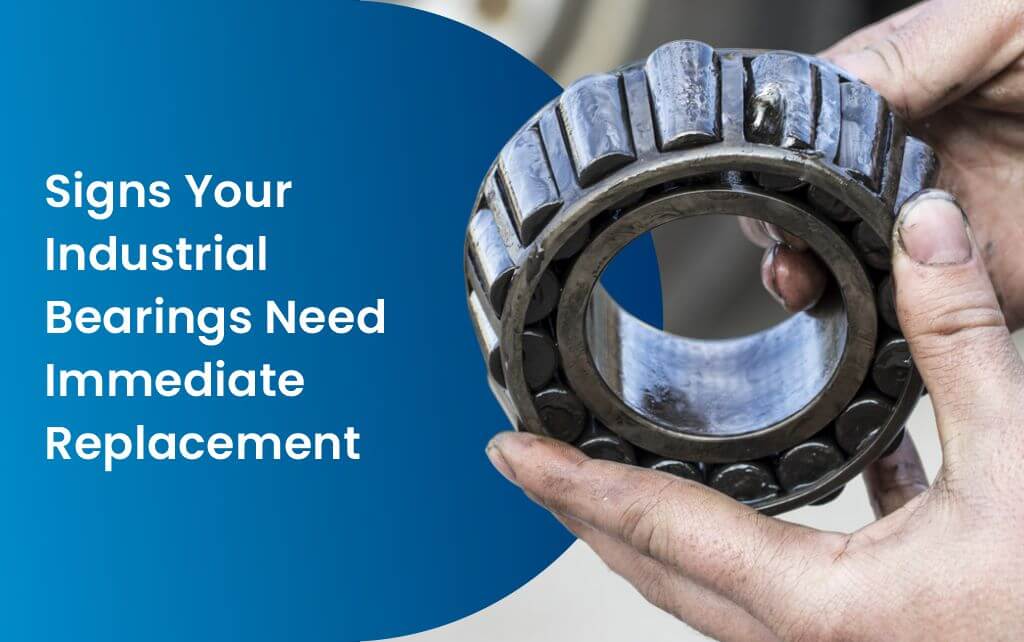
Why Ignoring Bearing Wear Costs You More Than a Replacement
Industrial bearings are the unsung heroes of every heavy-duty machine. Whether you run a rolling mill, a cement plant, a steel processing unit, or an agricultural setup, bearings keep your operations moving smoothly. But like every mechanical component, they wear out, and when they do, the consequences can be swift and expensive.
The good news is that bearings rarely fail without warning. They send clear signals long before they give up completely. Catching those signals early is the difference between a planned maintenance stop and a catastrophic breakdown that halts your entire production line.
In this article, the team at S. Goel Bearing & Co. walks you through the most reliable signs your industrial bearings need immediate replacement, so you can act before the damage spreads. We have served over 1,000 rolling mills across India since 1990, and this guide draws directly from that on-ground experience.
1. Unusual Noise Coming from the Bearing Housing
Sound is one of the earliest and most dependable indicators of bearing distress. A healthy bearing runs with a consistent, low-level hum. The moment you start hearing something different, your ears are telling you that something is wrong inside the bearing.
What to Listen For
- Grinding or growling noise: Points to contamination inside the bearing, often from dirt, metal particles, or inadequate lubrication. The rolling elements grind against foreign material, accelerating wear on raceways and balls or rollers.
- Squealing or screeching: Usually linked to lubrication failure. When the lubricant film breaks down, metal contacts metal directly, producing a high-pitched squeal that signals rapid surface deterioration.
- Clicking or popping: Happens when rolling elements pass over spalls, pits, or cracks on the raceway surface. Each click represents a fatigue failure point that will grow larger over time.
- Rumbling or vibration noise: Often associated with misalignment or uneven loading in cylindrical roller bearings or tapered roller bearings.
At S. Goel Bearing & Co., we recommend periodic acoustic checks using ultrasonic listening devices in high-load environments like steel mills and crusher plants, where ambient noise can mask early bearing sounds.
2. Excessive Heat and Rising Operating Temperatures
Heat is a bearing’s enemy. Industrial bearings are designed to operate within a specific temperature range. Once that range is exceeded consistently, both the bearing material and the lubricant begin to degrade faster than normal.
A bearing running 10 to 15 degrees Celsius above its normal operating temperature can have its grease life cut in half. Run it 20 to 30 degrees above the threshold, and you are looking at accelerated fatigue cracking, raceway discoloration, and in severe cases, bearing seizure.
Common Causes of Overheating in Industrial Bearings
- Insufficient or degraded lubrication: The most frequent cause. Old grease loses its viscosity and separating film strength, causing metal-to-metal contact.
- Overloading: Applying loads beyond the bearing’s dynamic load rating generates excessive internal friction.
- Incorrect bearing fit: An over-tight interference fit reduces internal clearance, leading to preload and heat build-up.
- Misalignment: A shaft or housing that is even slightly misaligned concentrates load on one side of the bearing, generating uneven heat.
Use a contact thermometer or infrared temperature gun to monitor bearing housing temperatures regularly. If the reading climbs steadily over several shifts, plan the replacement without delay.
3. Increased Vibration Levels and Instability
Vibration analysis is one of the most objective tools for assessing bearing health. Every rotating machine produces a unique vibration signature. When a bearing starts to deteriorate, that signature changes in measurable ways.
Industries that run deep groove ball bearings, spherical roller thrust bearings, or self-aligning ball bearings in high-speed applications rely heavily on vibration monitoring to catch early-stage defects before they turn into full failures.
What Rising Vibration Tells You
- Outer ring defect: Produces a repetitive vibration signal at a specific frequency as rolling elements pass over a damaged spot on the outer raceway.
- Inner ring defect: Generates a modulated vibration pattern that changes with shaft rotation.
- Rolling element damage: Creates vibration at ball or roller spin frequencies.
- Cage failure: Produces irregular, low-frequency vibration that worsens quickly.
If your vibration monitoring data shows a steady upward trend over two to three weeks, treat it as a strong sign that replacement is overdue. A planned swap is always far less costly than repairing damage to shafts, housings, and connected components caused by a bearing that runs to failure.
4. Visible Physical Damage and Contamination
When you open a bearing housing for scheduled maintenance, a close visual inspection tells you a lot. A bearing that looks clean and smooth is usually performing well. One that shows visible wear patterns, discoloration, or contamination residue needs to come out immediately.
Physical Signs That Demand Immediate Replacement
- Spalling and pitting on raceways: Small craters or flakes on the raceway surface indicate fatigue failure. Spalling spreads rapidly once it starts and produces metal debris that further damages the bearing.
- Brinelling: Indentations on the raceway that match the spacing of the rolling elements. Caused by static overload or shock loads. True brinelling means the bearing metal has permanently deformed.
- Corrosion and rust: Surface rust on raceways causes roughness, increased rolling resistance, and accelerated wear. Common in bearings exposed to moisture or improper storage.
- Smearing: Shiny, streaked surfaces on rolling elements caused by sliding rather than rolling contact. Usually a sign of lubrication breakdown or excessive speed.
- Cage deformation or fracture: A damaged cage misaligns rolling elements, leading to uneven load distribution and catastrophic failure.
- Discoloration: Blue, purple, or black staining indicates overheating has already altered the metallurgical properties of the bearing steel.
At S. Goel Bearing & Co., we always advise clients to retain failed bearings for root cause analysis. Understanding why a bearing failed helps you prevent the next failure, whether the issue is with the bearing quality, installation, lubrication, or operating conditions.
5. Increased Radial or Axial Play Beyond Tolerance
Every bearing has a defined internal clearance, also called bearing play or looseness. As a bearing wears, the contact surfaces between the rolling elements and raceways erode, causing the internal clearance to grow beyond the manufacturer’s specified tolerance.
Excessive play leads to shaft wobble, poor positioning accuracy, increased noise, and accelerated wear on mating components. In precision machinery, even a small increase in bearing play can ruin product quality and dimensional accuracy.
How to Check for Excessive Bearing Play
- Use a dial indicator to measure radial or axial shaft movement. Compare the reading against the bearing’s specified clearance class.
- For tapered roller bearings and angular contact ball bearings, check preload settings, as these types typically run with zero clearance or controlled preload.
- For cylindrical roller bearings, measure the free radial internal clearance before and after installation to confirm the fit has not over-reduced it.
If play readings exceed the maximum permissible value, the bearing needs replacement. Running a worn-out bearing in an industrial bearing replacement situation without acting promptly will cause the shaft and housing bore to wear as well, turning a simple bearing swap into a far more expensive repair job.
6. Lubrication Failure and Contaminated Grease or Oil
Lubrication is the lifeblood of any bearing. It separates rolling and sliding surfaces, carries away heat, and protects against corrosion. When lubrication fails, bearing life drops sharply.
Grease condition is one of the clearest indicators of bearing health. When you inspect or re-lubricate a bearing, check the existing grease carefully. Healthy grease is smooth and uniform in color. Grease that has degraded or been contaminated tells a different story.
Warning Signs in Bearing Lubricant
- Black or dark brown grease: Oxidized lubricant that has lost its protective properties. Time to replace both the bearing grease and assess the bearing condition.
- Metal particles in grease: Shiny metallic flakes or a gritty texture signal active wear inside the bearing. The bearing is consuming itself.
- Water contamination: White or milky grease means moisture has entered the housing, likely through a seal failure. Moisture leads to corrosion and hydrogen embrittlement in bearing steel.
- Hardened or dried-out grease: Grease that has lost its base oil is no longer lubricating. It can also block re-lubrication attempts, making the situation worse.
- Leaking seals: Grease escaping through damaged seals lets contaminants in while letting lubricant out, a two-way failure mode.
In many industrial bearing replacement situations, addressing the lubrication issue alone is not enough once internal damage has occurred. The bearing must come out and a proper inspection should follow before a new one goes in.
7. Frequent Unplanned Downtime and Reduced Machine Performance
Sometimes the most telling sign is not in the bearing itself but in the machine’s overall performance. When a piece of equipment that used to run reliably starts requiring frequent unplanned stops, or when output quality begins to drop without any obvious process change, worn or damaged bearings are often the root cause.
In rolling mills and cement plants, even a slight increase in bearing friction raises power consumption. If your motors are pulling more current to maintain the same output speed, bearings could be the reason. Similarly, if finished product dimensions are drifting out of specification, check the spindle and roll-neck bearings first.
Performance Indicators Linked to Bearing Deterioration
- Higher energy consumption with no change in process parameters.
- Inconsistent product quality or dimensional drift in machined parts.
- Increased seal leaks or lubricant usage without explanation.
- Machine vibration is transmitted to the frame or structure.
- Repeated bearing failures in the same position, which points to a systemic issue such as misalignment, overloading, or an incorrect bearing specification.
Track your maintenance logs carefully. If the same bearing position needs attention every few weeks, a deeper investigation into operating conditions, shaft alignment, and bearing selection is warranted. The right bearing in the right application, installed correctly, should give you months or years of reliable service.
Proactive vs. Reactive: Getting the Timing Right for Industrial Bearing Replacement
One of the most important decisions in maintenance management is knowing when to replace a bearing proactively rather than waiting for it to fail completely. Just like how a claimant working with criminal injury solicitors gathers evidence early to build a strong case before irreversible damage is done, your maintenance team should act on early warning signs before the situation turns into an unmanageable breakdown.
Many industrial operations use condition-based maintenance, where bearing replacement is triggered by measured parameters rather than fixed time intervals. This approach is more economical because it avoids replacing bearings that still have useful life remaining, while also preventing catastrophic failures.
Tools and Techniques for Proactive Replacement Decisions
- Vibration analysis: Establish baseline vibration spectra for each bearing position and set alarm thresholds. When vibration levels trend upward consistently, schedule the replacement in the next planned maintenance window.
- Thermographic surveys: Infrared cameras detect heat signatures from failing bearings even through housing walls, allowing non-intrusive monitoring.
- Lubrication analysis: Send grease or oil samples to a laboratory periodically. Metal content analysis reveals wear rates and contamination levels before external symptoms appear.
- Acoustic emission monitoring: Ultrasonic sensors detect the high-frequency stress waves produced by subsurface fatigue cracks, catching bearing defects earlier than conventional vibration analysis.
- Manufacturer life calculations: Use the L10 life calculation from the bearing manufacturer’s data to estimate the expected service life under your actual load and speed conditions.
At S. Goel Bearing & Co., our regional engineers across north, south, east, and west India work with clients to set up sensible monitoring routines matched to their specific application demands. A rolling mill bearing running under heavy cyclic loading needs a different monitoring frequency than a ball bearing in a low-speed conveyor drive.
Correct Installation Matters as Much as the Replacement Bearing Itself
Replacing a failed industrial bearing is only half the job. Installing the new bearing correctly is equally important. A good-quality bearing installed incorrectly will fail faster than a worn-out bearing in good alignment.
- Always clean the housing bore and shaft seat before fitting the new bearing.
- Use the correct fitting tool or induction heater for mounting. Never strike the bearing directly with a hammer.
- Verify shaft and housing fits against the bearing manufacturer’s tolerance tables.
- Apply the correct quantity and type of lubricant. Over-greasing is as harmful as under-greasing.
- Check alignment after installation. Even 0.1 mm of misalignment significantly reduces bearing life in high-speed or heavily loaded applications.
- Confirm that seals and shields are undamaged and properly seated before closing the housing.
Much like criminal injury solicitors who rely on precise documentation and correct procedure to protect their clients’ claims, your maintenance team needs to follow correct installation procedures to protect the investment you make in every new bearing. Shortcuts at installation lead to premature failures that cost far more than the time they save.
Frequently Asked Questions About Industrial Bearing Replacement
How often should industrial bearings be replaced?
There is no single fixed interval. Replacement should be based on condition monitoring data, calculated L10 life under actual operating loads, and visual inspection findings. High-load applications in steel mills may require bearing inspection every few months, while lighter-duty setups can run longer between checks.
Can a bearing be repaired instead of replaced?
In most industrial applications, bearing repair is not practical or cost-effective. Once raceways, rolling elements, or cages show fatigue damage, internal geometry is compromised and the only reliable solution is full replacement. Some large, specialty bearings can be reconditioned by specialists, but this is the exception rather than the rule.
What is the most common reason industrial bearings fail prematurely?
Lubrication failure and contamination together account for a large proportion of premature bearing failures. Incorrect lubrication quantity, wrong lubricant type, degraded grease, and contaminated lubricant all accelerate wear far beyond the bearing’s designed service life. Misalignment and incorrect fits are also major contributors.
How does S. Goel Bearing & Co. help with bearing selection for replacements?
Our team of regional engineers and technical specialists works with you to identify the correct bearing type, size, tolerance class, clearance group, and lubrication specification for your application. We stock URB and ZWZ bearings across ball and roller types, from deep groove ball bearings for standard applications to four-row cylindrical roller bearings for demanding roll-neck applications in steel mills.
Conclusion
Industrial bearings carry enormous responsibility. They support loads, transmit motion, and keep your machines running around the clock. When they start showing signs of trouble, acting quickly is the smartest and most cost-effective decision you can make.
The seven warning signs covered in this guide, unusual noise, excessive heat, increased vibration, visible physical damage, excessive play, lubrication failure, and declining machine performance, are your early warning system. Treat each one seriously. Just as criminal injury solicitors advise clients not to wait until a situation worsens before seeking help, your maintenance team should not wait for a bearing to reach catastrophic failure before taking action.
At S. Goel Bearing & Co., we have spent over three decades helping industries across India keep their machines running reliably. As the largest importer of URB and ZWZ bearings in India, we offer a comprehensive range of ball bearings and roller bearings to suit every application, from deep groove ball bearings for general industrial use to matched tapered roller bearings for precision assembly requirements.
Whether you need a quick replacement or a full bearing audit for your plant, our team is ready to help. Get in touch with S. Goel Bearing & Co. today, and let us put our expertise to work for your operation.